What are the main parts of a turbo and how they work?
By Sam
June 27th, 2024
1406 views
Part of a Turbo: What's Inside and How it Works?
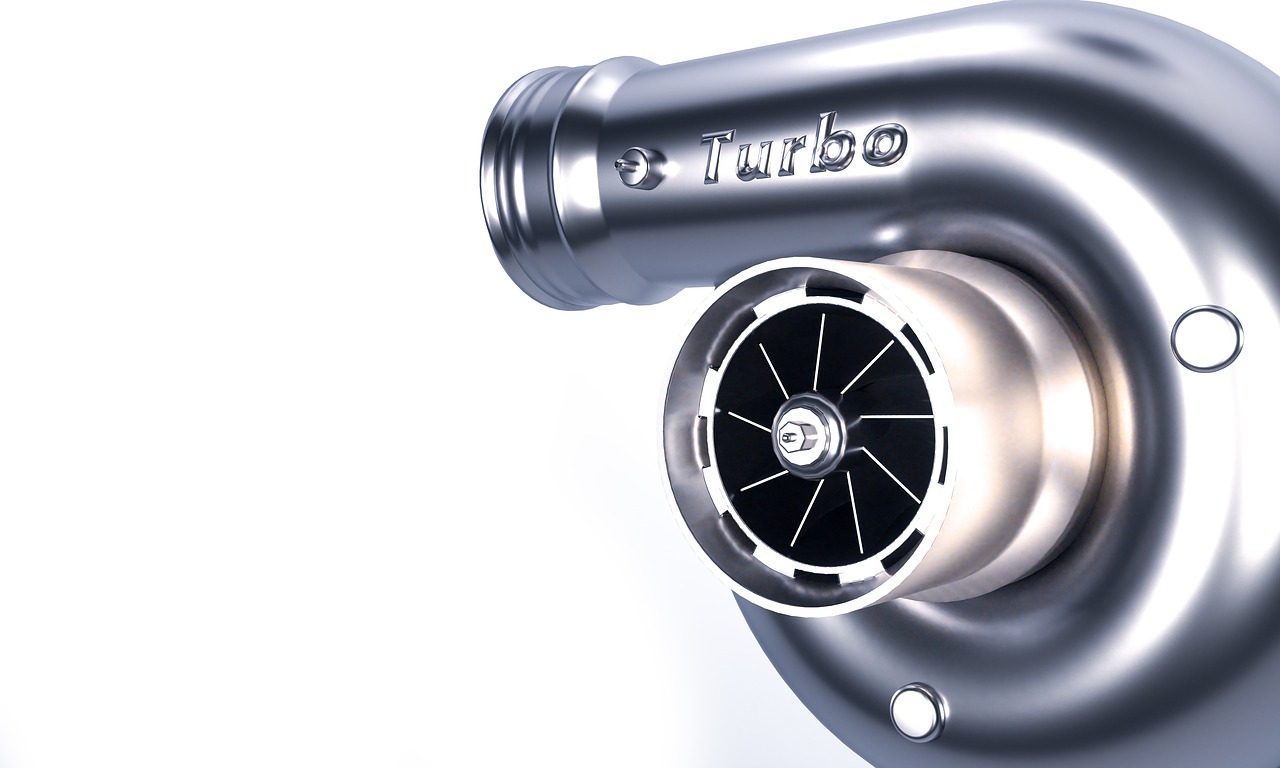
Turbochargers are an integral part of most cars, and most people find it difficult to learn about this device, so today I will explain the construction and principles of turbochargers to everyone, hoping to provide great help to everyone on the road to learning turbochargers.
When introducing the internal and external construction of turbochargers, everyone must understand that not all cars must be equipped with turbochargers. They are forced induction systems that increase efficiency and power by using internal combustion and forcing additional compressed air into the combustion chamber. In short, turbochargers are able to give your car a huge amount of power in a short period of time.
Turbine
- Function: Converts the energy from the exhaust gas to rotate the turbine blades.
- Working Principle: Exhaust gas from engine combustion charges the turbine housing through the exhaust manifold and puts the turbine impeller into rotation. The blades fixed on the turbine impeller shaft absorb energy in the exhaust gases to make it rotate. The rotation of the turbine, with its shaft, drives a connected turbine shaft, which also drives the compressor to work. Generally, the turbine impeller is made of a high-temperature alloy capable of resisting the aggression of hot gas with a high temperature and high pressure.
Compressor
- Function: Compresses the intake air, increases the density of the air, and thus raises the mass flow of the air into the engine.
- Working Principle: The compressor impeller and turbine impeller are connected through the turbine shaft. While the turbine impeller rotates, the same case applies to the compressor impeller. When the compressor impeller starts rotating, it brings in air before compressing it by the work of the blades. The compressed air increases its pressure and also its temperature. The high-pressure air gets into the intake manifold through the compressor casing, which supplies the engine with combustion. The primary materials applied to the compressor impeller are aluminum alloy and titanium alloy since they are lightweight and highly tensile.
Intercooler
- Function: Cools high-temperature air compressed by a compressor, increasing the density of the air.
- Work Principle: On compression of air by a compressor, the air becomes of higher temperature. The air of high temperature is less dense, and after it gets into an engine, it will reduce combustion efficiency. The intercooler cools high-temperature air and thereby enhances its density. Intercoolers are heat exchangers through which the heat of high-temperature air is removed by employing ambient air or coolant. The denser, cooler air can improve combustion efficiency and power outlay after entering the engine. An intercooler is usually constructed with aluminum due to its high thermal conductivity.
Turbine Shaft
- Function: Connects the turbine to the compressor to transfer mechanical energy.
- Working Principle: One end of the turbine shaft is connected to a turbine wheel, while the other is connected to a compressor wheel. Through the rotation of the turbine wheel, the produced energy shall be delivered in circulation to the compressor wheel through a turbine shaft. Materials used for constructing turbine shafts are high-strength alloy materials, such as those resisting stress caused by high temperatures, high-pressure environments, and high-speed rotation.
Wastegate
- Operation: Regulates the exhaust gas flow through and into the turbocharger's turbine; it is a governor of turbine speed and boost pressure.
- How It Works: The wastegate is, in essence, a control valve. It opens when the desired boost pressure is attained, thus releasing some of the exhaust gas directly into the atmosphere, bypassing the turbine section. In this manner, the turbine speed can be regulated and, as a result, protects from over-boosting the engine. There exist two types of wastegate valves: mechanical and electronically controlled. The former is the type that depends on spring loading and setting of air pressure, while the latter is that which an ECU accurately controls.
Oil Lubrication System
- Function: Lubricates the turbine shaft and bearings to minimize friction and any wearing processes.
- Working Principle: The oil pump supplies the lubricating oil to the turbine shaft and bearings. In this manner, it produces an oil film that takes away some heat and brings down friction and wear. The lubrication system should include the oil pump, oil pipe, oil filter, and oil cooler to ensure that the flow and cooling effect of the lubricating oil are met. Primarily in high temperatures and high pressure, the oil used is mainly lubricating oil with relatively good performance stability.
Bearing System
- Function: Supports the turbine shaft, reduces friction and wear, and ensures smooth rotation of the turbine shaft.
- Working Principles: A bearing system supports the turbine shaft; at the same time, it reduces friction and wear through a lubrication system. Common types include sliding bearings and rolling bearings. Sliding bearings, which support the turbine shaft based on lubricating oil films, are suitable for high-speed and high-load environments. Rolling bearings support the turbine shaft with balls or rollers with less friction and are ideal for environments that are middle-speed and high.
Those components will make the turbocharger compress air well so the engine has better power and combustion efficiency. The design and material selection for each component consider its work environment and requirements to ensure that the whole system is reliable and has good performance.
Previous
How a turbocharger effectively powers your car
Read More
Next
How Much Horsepower Does a Turbocharger Add?
Read More